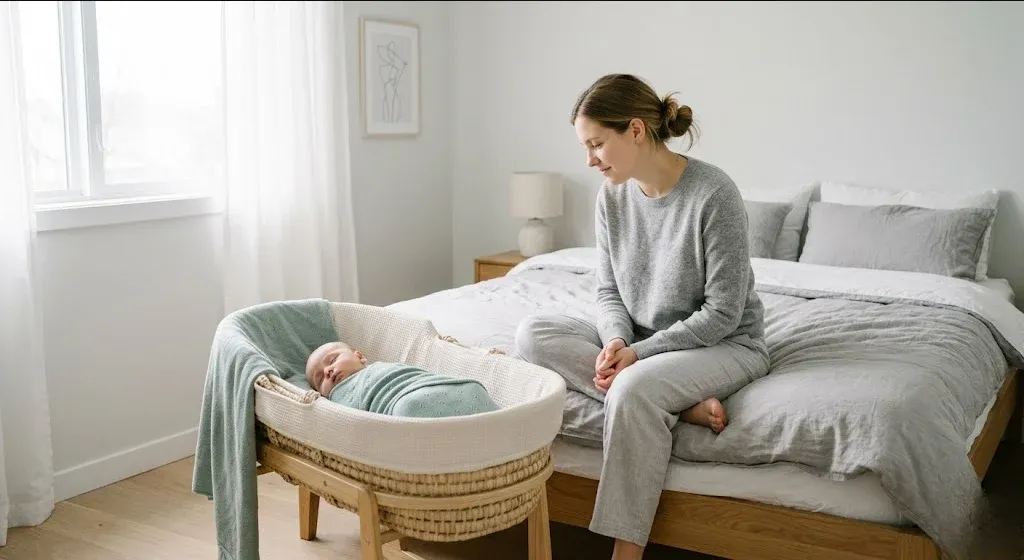
Brooklyn bonding rituals often look beautifully ordinary. They happen on brownstone steps before a stroller walk, beside a window while the baby watches light move, during a quiet song that survives subway noise, or in a small bedroom after an overstimulating family visit. Gentle bonding is not about designing a perfect ritual. It is about choosing repeatable moments that say, “I see you, I am here, and we can slow down together.”
Bonding is built through repeated, caring interactions, and it can grow even when parents feel tired, uncertain, or emotionally slower than expected. Parents who want a wider foundation can explore urban gentle parenting and adapt only the parts that fit their baby’s temperament.
For health-informed context, Zero to Three’s attachment relationship resource is a useful reminder that baby care should follow development and safety, not pressure.
The window-light hello before the day gets busy
Parents use the same morning window to greet the baby with eye contact, light, and a quiet voice. In Brooklyn homes where stairs, sidewalks, cafes, parks, and compact rooms shape daily care, this matters because the smallest friction points can become the moments that make parents feel defeated. Try treating this as a practical care cue rather than a rule. Notice what happens in your baby’s body, adjust one part of the room or your pace, and then repeat the helpful version often enough for it to become familiar.
A one-song ritual for stroller buckles and sidewalks
One song during buckling, waiting, or stepping outside makes movement feel familiar. The gentle move is to make this step visible, simple, and repeatable. Instead of waiting until everyone is already upset, prepare the environment so the next care action is obvious. Babies learn through repetition, and parents benefit when the home stops asking them to solve every moment from scratch.
This is also the kind of steady caregiving encouraged throughout bonding and attachment, where the focus stays on cues instead of performance.
The brownstone stair pause that protects transitions
Pausing before stairs or elevators helps the baby shift from home sounds to street sounds. Many families overlook this because it seems too ordinary to matter, but ordinary is exactly where newborn care lives. A repeated phrase, a reachable cloth, a dimmer lamp, or a slower hand can change the emotional temperature of the moment without adding a complicated system.
This article also aligns with Zero to Three’s responsive parenting guidance, especially the emphasis on responsive, steady caregiving.
Reading the same board book without caring about the words
The point of reading is voice, rhythm, and closeness, not finishing the story. If the baby resists, that does not mean the idea is wrong. It may mean the timing, intensity, or surrounding stimulation needs to change. Gentle parenting asks parents to observe first, respond second, and revise without shame when the baby shows that a different version is needed.
For families building a broader plan, newborn care support can help connect this practice with the rest of newborn life.
A laundry-day cuddle that does not need extra time
Holding the baby while sorting clean clothes can become a warm repeated check-in. This protects the caregiver as much as the baby. When a step has a place and a purpose, the parent spends less energy hunting, guessing, or apologizing to themselves. Less frantic energy in the adult often becomes more ease in the baby’s experience of care.
Parents should also keep trusted medical guidance close; UNICEF’s skin-to-skin contact guidance can support safer decisions when sleep, feeding, or soothing questions feel unclear.
Turning neighborhood walks into regulation practice
Short walks offer light, movement, and caregiver narration without needing a major outing. The goal is not to perform calm. The goal is to create a condition where calm has a better chance to return. Some days this will work quickly; other days it will simply keep the family from escalating further. Both outcomes count.
Brooklyn bonding works best when it stays simple
The strongest rituals are the ones tired parents can still repeat without resentment. Start with a version so small that you can repeat it while tired. If it takes too many supplies, too much space, or a perfect mood, it will disappear on the days you need it most. The best gentle practices are sturdy enough to survive real life.
If bonding feels blocked by ongoing numbness, panic, intrusive fear, depression, or inability to care for yourself or the baby, reach out to a healthcare professional promptly; support is part of responsible parenting. When this topic brings up more questions, parenting articles offers a helpful next place to continue learning.
Start with one change, watch for the baby’s response, and let the practice grow only when it genuinely lowers stress. Gentle parenting is not a performance of calm; it is the repeated choice to meet real needs with as much steadiness as you can access.
A practical way to apply this is to pair the first cue with the first available gentle action. For this article, that might mean noticing parents use the same morning window to greet the baby with eye contact, light, and a quiet voice and then choosing one response that lowers friction. Parents do not need to analyze every detail in the moment; they need a small, repeatable bridge from stress to care.
It is also worth asking what the adult body needs before the baby’s next cue arrives. A parent who is thirsty, hungry, touched out, or mentally overloaded will find every newborn need harder to meet. Supporting the caregiver is not separate from supporting the baby; it changes the tone, pace, and patience available in the room.
Keep the standard realistic. Some days the win is a beautiful rhythm; other days the win is that everyone was fed, changed, held, and brought safely through a difficult stretch. Gentle care includes the messy days because those are the days when babies and parents need compassion most.
The important part is to make brooklyn parents share gentle bonding rituals feel usable in the home you have now. Begin with one steady response, repeat it for several days, and adjust from your baby’s cues rather than from comparison. Over time, the small practice becomes easier to trust because you have seen it work in your own family’s real conditions.
For brooklyn parents share gentle bonding rituals, it can help to choose one observation window rather than judging the whole day. Watch your baby during a feed, a transition, a rest attempt, or a recovery moment in Brooklyn homes where stairs, sidewalks, cafes, parks, and compact rooms shape daily care. Write down what seemed to help: softer light, less talking, a slower hold, a fresh diaper, a snack for the parent, or a shorter activity. This turns parenting into a feedback loop rather than a pass-or-fail test.
Another useful practice is to separate the baby’s need from the parent’s self-criticism. A baby who cries, startles, wakes, or needs extra closeness is not grading the caregiver. The baby is communicating from a very new body. When parents respond with curiosity, they usually find a kinder and more accurate next step than they would find through panic.
The important part is to make brooklyn parents share gentle bonding rituals feel usable in the home you have now. Begin with one steady response, repeat it for several days, and adjust from your baby’s cues rather than from comparison. Keep a short note on what changed, what stayed difficult, and what helped the caregiver feel more settled. That small record prevents the family from starting over emotionally every morning and makes the next gentle choice easier to find.